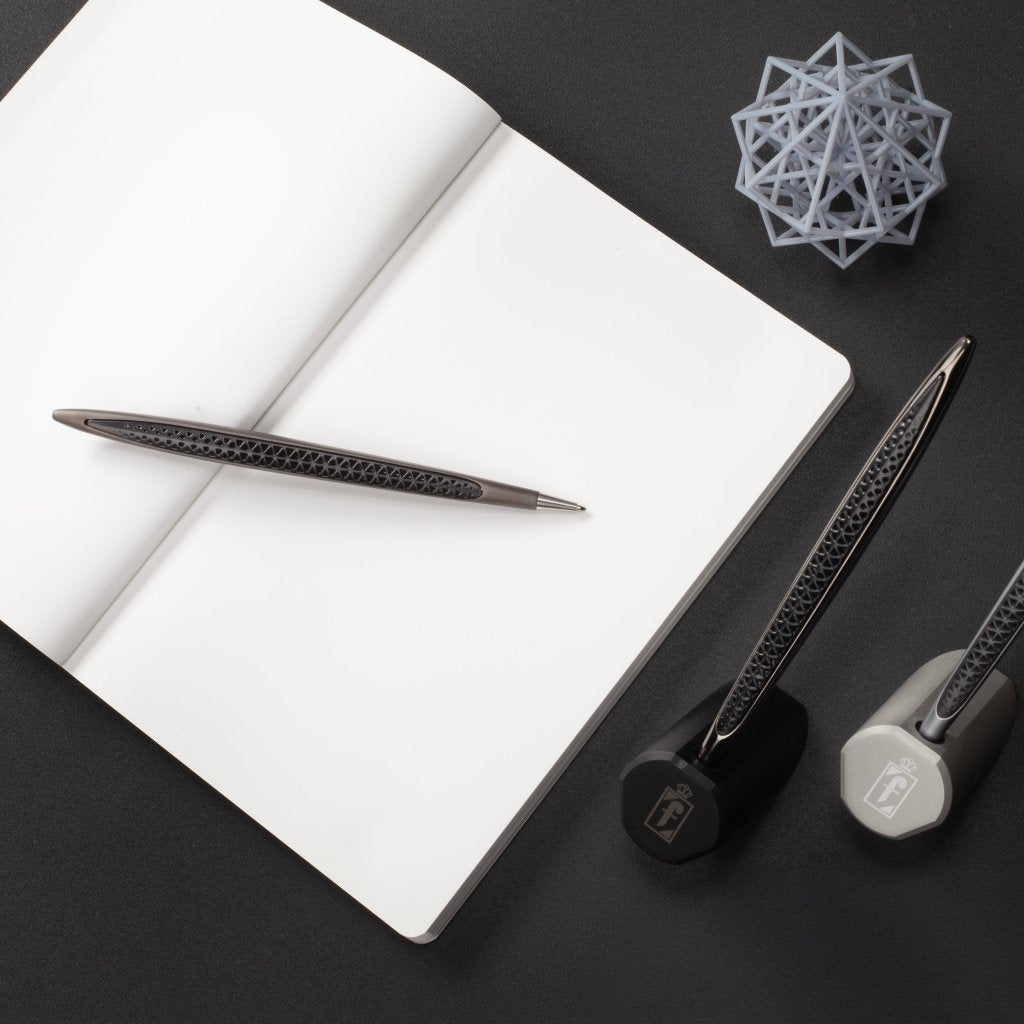
The desk as a design space: wood, concrete and 3D printing according to Pininfarina
A desk is not just a surface to work on. It is the place where ideas, decisions, sketches, and projects take shape. Even the smallest objects help define its character: the weight of a support, the warmth of wood, the tactile presence of concrete, the geometry of a pen. In the world of Pininfarina Segno, the writing instrument can become part of the everyday architecture of the space.
Three material languages help to interpret this vision: the wood of the Cambiano family, the concrete of Aero, and the 3D printing of Cambiano Transition. Alongside them, Speedform shows how a magnetic support can transform the gesture of putting away a pen into a designed detail. They are not variants of the same object: they are different responses to the relationship between form, function, and environment.
When the desk becomes a small interior design project
In interior design, quality does not depend solely on the choice of main furniture. The close-up scale also matters: what we touch every day, what remains visible between one meeting and the next, the way accessories interact with materials and surfaces. A pen resting on a support does not simply occupy space; it introduces a direction, a proportion, and a visual rhythm.
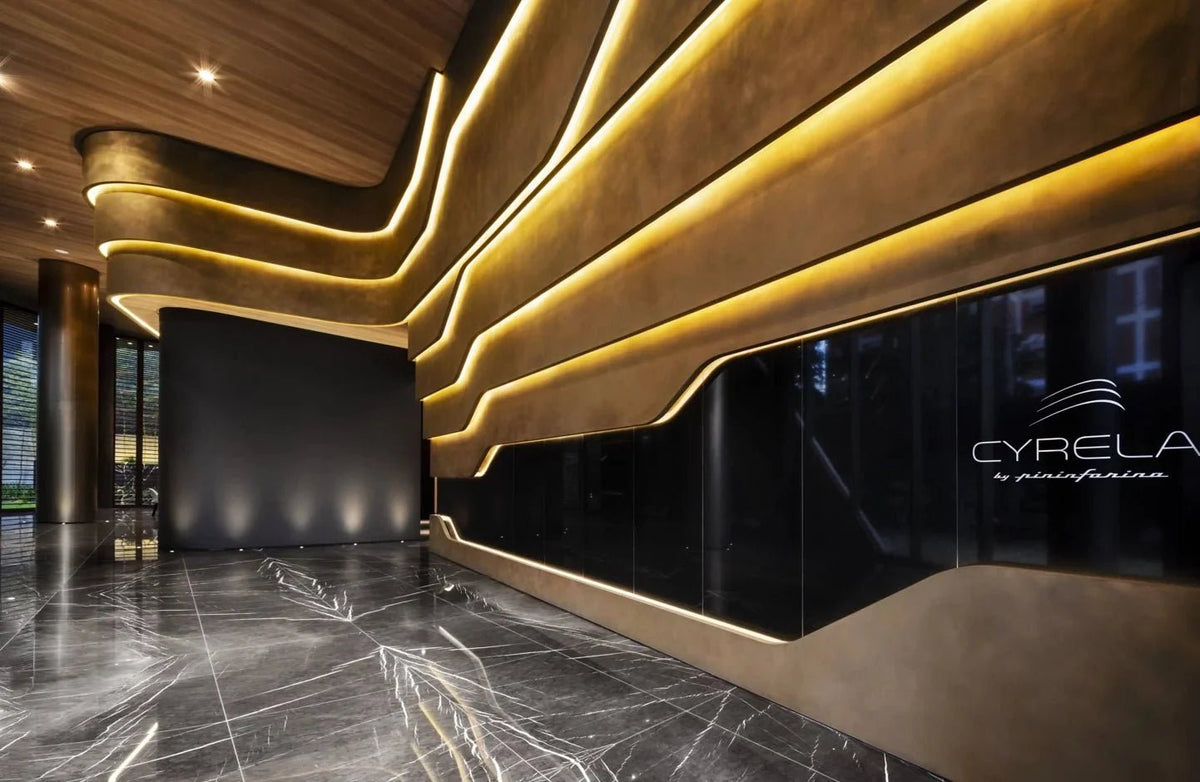
This attention to the relationship between aesthetics and use is consistent with the philosophy told by Pininfarina Home Design, where furnishings and spaces are interpreted as experiences, not just formal compositions. The desk is a much smaller scale, but it asks the same question: how can an object be useful and, at the same time, contribute to the identity of a place?
Cambiano Classic Cedro: technology meets natural wood
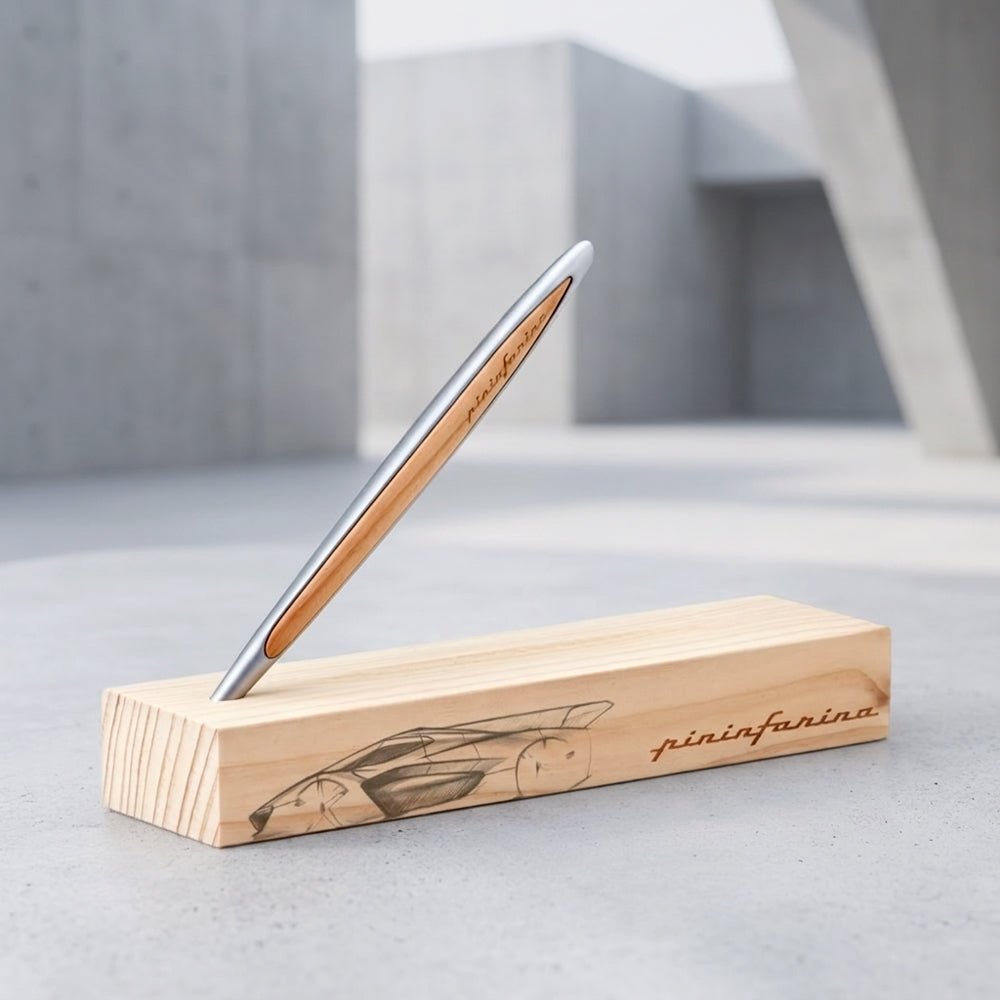
The Pininfarina Cambiano Classic Cedro builds its character on the encounter between the body of the pen and the natural solid wood base. Cedar introduces a warm material, with a presence different from that of metal: it does not compete with the technical mark of aluminum, but accompanies and enhances it.
In a professional office with a wooden desk, bookcases, and neutral finishes, this combination can create continuity. On a contemporary glass or stone desk, however, the natural support becomes a measured contrast. It is an example of how the choice of an accessory does not have to rigidly follow the material of the furniture: sometimes the dialogue arises precisely from the difference.

The value of the base
A dedicated support also changes the behavior of the object. The pen is not hidden in a drawer, but finds a recognizable position. It is an apparently minimal, yet relevant choice: an organized workstation reduces random elements and leaves room for the tools that truly have a role.
Pininfarina Aero: concrete as an expressive material
With Pininfarina Aero, the language changes. The pen with the Ethergraf® tip is accompanied by a raw concrete support: a material often associated with architecture, here reinterpreted at the scale of a desk object. The contrast between the visual lightness of the pen and the solid presence of the base creates a deliberately essential composition.
Concrete is not used as a simple industrial reference. Its texture helps give depth to the scene, especially in environments characterized by metal, stone, matte surfaces, and sober tones. The result is particularly interesting on a minimalist desk: a few elements, each with a precise function and personality.

A choice of character, not just style
A material accessory must work in the real context: workstation dimensions, free space, light, personal habits. For this, Aero is interesting above all as an example of balance. The visual strength of the base remains at the service of the object and does not turn the desk into an overloaded display.
Cambiano Transition: 3D printing becomes a language
The Pininfarina Cambiano Transition Ethergraf® interprets a more experimental direction. The anodized aluminum body pairs with 3D-printed nylon inserts, characterized by a perforated pattern. The geometry recalls generative design processes, in which the form is explored through parametric design tools and advanced production technologies.
Here, the technique does not remain invisible: it becomes part of the aesthetics. The openings, the solids, and the voids of the inserts make the construction method recognizable. The angled support completes the composition with a dynamic, almost sculptural pose. It is the model that most clearly relates the writing instrument to the language of contemporary architecture and product design.
What does generative design add?
In the design language, generative design does not simply mean drawing complex shapes. It means using parameters and constraints to explore configurations that can be difficult to achieve with traditional approaches. In the case of Cambiano Transition, the immediately perceptible aspect is the texture of the 3D-printed inserts: a surface that communicates innovation without giving up the recognizability of the Cambiano family.
The Ethergraf® version is designed for a light stroke and for gestures such as sketches and short notes. Those who prefer a traditional ballpoint pen can consider the distinctive Cambiano Transition Ink, which preserves the formal language of the collection with a different writing system.
Speedform: the precision of a gesture and the magnetic support
Another way to interpret the desk is to rely on a simple and repeatable gesture. Pininfarina Speedform Ethergraf® combines an aluminum pen with a magnetic base: the interaction between the object and the support becomes part of the everyday experience.
The difference compared to Cambiano Cedro or Aero is not only visual. Magnetism introduces a way of resting that makes the relationship between the pen and the base immediate. The choice can be particularly suitable for contemporary workstations, where accessories and tools must remain available without multiplying containers.

Ethergraf® and Ink: two experiences not to be confused
When choosing a design pen, it is important to distinguish the object from the type of writing. Ethergraf® technology uses a special metal tip that leaves a thin and generally light mark on the paper, without ink and without refills. The result also depends on the support: untreated common paper is recommended, while coated papers or those with special additives can make the stroke less evident.
An Ethergraf® pen should therefore not be presented as a universal substitute for an ink pen. It is particularly consistent with sketches, ideas, marks, and non-intensive notes. For signatures, frequent notes, and those looking for a more marked writing, the Ink versions with ballpoint tips meet different needs. The best choice is the one that respects the real gesture of the person who will use the object.
How to choose the pen based on your desk
There is no universally better combination. In a workstation with classic furnishings, natural materials, and a cozy atmosphere, Cambiano Classic Cedro offers an immediate relationship with wood. In a contemporary office with an architectural language, Aero introduces the tactile presence of concrete. For those who love parametric design, technical surfaces, and experimental objects, Cambiano Transition tells a more evident research. Speedform, on the other hand, is an essential reading of the relationship between the pen and the support.
The decisive question is not which object looks more scenic in a photograph, but which one will accompany the space and everyday use. The desk can be a representative, operational, or creative place; often it is all three at once. A well-chosen accessory enhances its identity without taking attention away from work.
A small object, a broader design vision
Wood, concrete, aluminum, and 3D-printed nylon tell different approaches, but share a principle: material is not a decorative coating added at the end. It is part of the project, perception, and interaction. This is the perspective that makes observing writing instruments also as home design objects interesting.
Pininfarina's design culture, matured between automotive, product design, and environments, finds in these small objects an accessible and concrete field of application. There is no need to transform a desk into a showroom: just choose a few coherent elements, capable of making an everyday gesture more pleasant and personal.
To explore the models mentioned, visit Cambiano Transition, Cambiano Classic Cedro, Aero, and Speedform Ethergraf® on the official shop.
Frequently Asked Questions
Which Pininfarina pen has a concrete support?
Pininfarina Aero is available with an Ethergraf® tip pen and a raw concrete desk support. The base is a distinctive part of its material language.
What characterizes Cambiano Transition?
Cambiano Transition combines anodized aluminum and 3D-printed nylon inserts with geometries inspired by generative design. It is accompanied by an angled stand; versions with different writing systems exist.
Does the Ethergraf® tip use ink?
No. The metal tip leaves a light and thin mark on the paper without ink or refill. It is advisable to use untreated common paper; it does not offer the same experience as a ballpoint pen.
What is the difference between Cambiano Classic Cedro and Speedform?
Cambiano Classic Cedro enhances the pairing of the pen with a natural wood base. Speedform, on the other hand, offers an aluminum pen with a magnetic base, favoring a different interaction between the instrument and the support.
Which model to choose for everyday writing?
For frequent notes and signatures, an Ink ballpoint version is generally more suitable. Ethergraf® pens are above all tools for light marks, sketches, and short notes; the choice depends on your own writing habits.